Shrinkflation
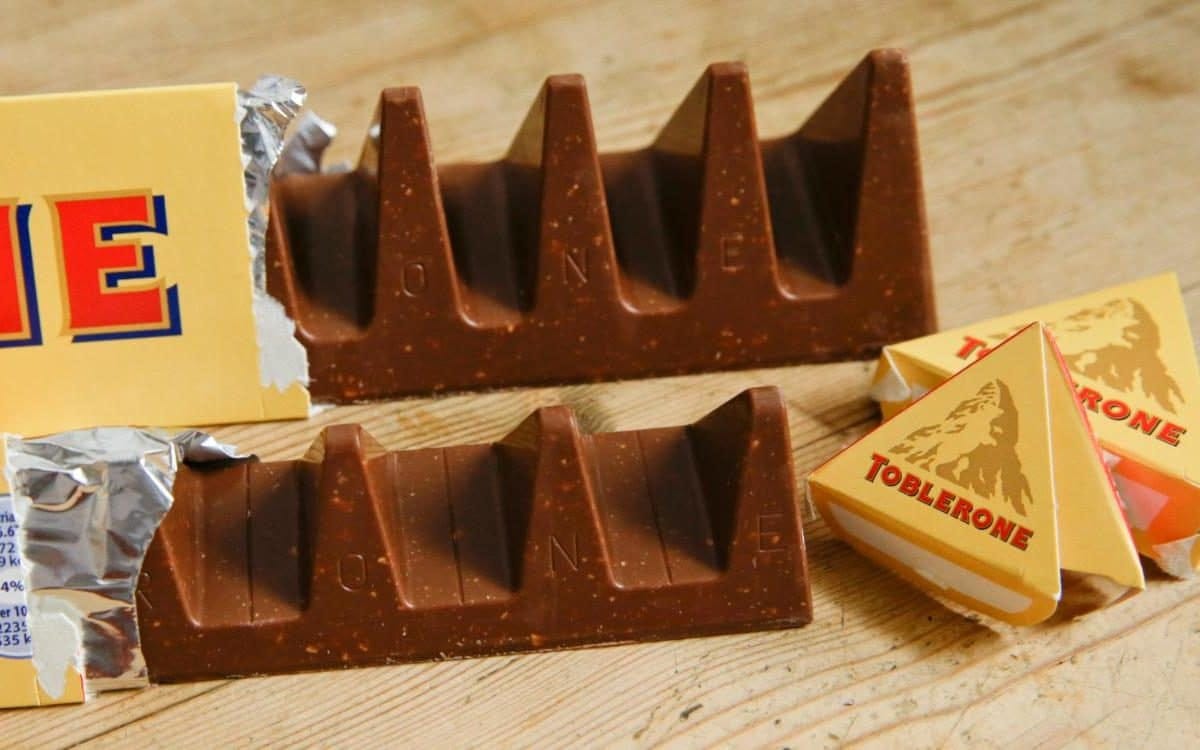
The other twin of a price increase is downcounting. Instead of selling the same products at a higher price, for the same price you get less products. This practice is often referenced as shrinkflation.
It is common to find a premium product within the same brand sold with less quantity (e.g. weight, count), line-priced to facilitate more effective promotion. The premium items usually have higher cost (ingredient, formation, benefits, packaging, investments) and are therefore launched with a smaller count. But that is not what we are talking about here.
Act as the CFO of a major CPG brand. Generate strategies to offset cost escalation. Be specific and explain your rationale.
(I hope it got you to giggle)
The recent inflationary cycle has been shocking due to its magnitude and pace. The cost pressure coming from supply chain disruption, ingredient shortages, labour pressure, financing costs were all experienced in a relatively short period of time. Keep in mind big CPGs default to rolling 18-month demand forecasts and 3-5-year strategic planning cycles. To execute price increases, it will also require months of lead time as retailers impose designated change windows.
Nobody likes to do a price increase or downcount. Never consumers, seldom retailers, and not even CPG people. We are consumers too and understand what’s on our own minds.
Every brand will try to find efficiencies to offset the hurt, but chances are they are already lean and optimized after years of continuous improvement. There may be ways to find a few points of efficiency but not more than that, and not permanently. Let’s say you need to recover 25-35% of margin hurt, the kind that can make some brands turn from healthy to having to cut budgets, or from ok to becoming unprofitable.
In response to significant structural cost increases, pricing is the only viable option.
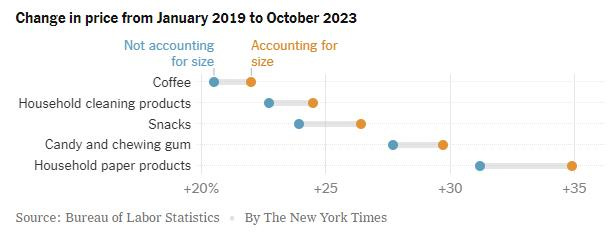
But how? A one-shot 25% price increase is usually out of the question. How about 10% every window possible to “lessen the blow”? How about a combination of size and price? And this is what happened:
A side story
You are at your favourite restaurant. You notice the menu prices have not changed since you last came and proceed to order your usual for years. The dish arrived and it’s 2/3 the size. There used to be 8 shrimps and now only 5 but who’s counting? (answer: the chef, the boss, and now you have to too).
In the current environment, it may be better to raise the price and maintain the restaurant’s standard. Restaurants, like brands, need to adjust to their customers’ expectations. When the norm changes, you have to meet them where they are. Consumers are smart and they understand the world they live in. The question on my mind was not the missing shrimps but what else might have changed in the dish that could be a real issue. Have you switched oil? Are you using less fresh ingredients (or worse)?
I understand the practical rationale and “benefits” of downcounting as an option but hate it personally because it violates trust. Especially when it is done “in stealth” which is the norm, unfortunately.
Downcounting is not a decision taken lightly
(even by the industry)
Because downcounting is actually more expensive than a straight price increase.
Each time a product size (e.g. liquid volume, unit quantity, gram weight) is changed, it involves a lot of operational changes and complexity costs, including but not limited to:
Packaging dimensions (e.g. size of bag or bottles). Consumer protection laws require products to be filled to a minimum to prevent deceptive practices. So the bag/bottle/box may need to be changed. If the changes in dimensions are significant, the inner case or pallet configurations may also need to change for safety and efficiency reasons.
Product Labels need to be updated with new weight and related information. All references to specifics like nutritional value (per daily requirements) or dosage (e.g. over-the-counter vitamins or medications) will have to be updated as well. This assumes the recipe/formulation has not changed, just quantity per retail pack.
Manufacturing needs to adjust operations and procedures, whether it’s line speed, equipment calibration, quality assurance, etc. While the making (mixing, cooking, brewing, etc.) of the actual product remains the same, the setup for all filling/bagging/packing steps will.
Sales and Marketing materials that include the original product pack shots will need to be updated to the new references to reflect the new descriptions and photos. Imagine every marketing campaign, at every retail customer distribution point, and all merchandising materials.
Price List, Sales Sheet, Master Data updates to avoid pricing/data discrepancies at every system. Errors in the order, billing, and shipping process can result in fines by the retailer, so this needs to be done right
While the common argument is that these are one-time costs, and that is true, for products that are not high velocity skus it can take months if not longer to pay back the switching cost.
Meanwhile, your multi-functional team end-to-end all feel worse about themselves being a part of this, but they have to.
Why Downcount then?
While it is common to think about Sizing and Pricing independently, they go hand in hand and need to be considered together. Established product (size) lineups are often optimized over time to meet consumer and channel needs.
More importantly, adjusting sizing and pricing together allows brands to hit certain key price points, either every day or on a promotional basis. For instance,
The dollar channel may only accept products at $3, $4 or $5
There is a category promotional price point at $3.99 (or buy 2 for $6), which represents 60% of annual sales
At Club, no item in your category exceeds $20 per pack.
Strategically, down counting is just one of the tools in the box. It creates options to achieve established value propositions (benefits x price x quantity) and, if done properly, can also enhance competitive positioning.
From an industry POV, you can take away that downcounting is a more permanent signal to a price increase than a price increase itself, given the additional operational cost and commitment.
On an interesting final note, if you are a Direct-to-Consumer brand with a small product portfolio of SKUs - do you need to care as much about established price points, sizes, and retailer margins? Will you communicate with your customers with high trust and transparency the reason you need to raise prices (with the expectation this can go the other way when the catalyst cost pressure is over)?
Will you do the same as a big brand?
For more reading: Shrinkflation 101: The Economics of Smaller Groceries
Depends it's difficult to assess what sometimes is the best option but still what customers you serve, your sales channels, and the value of the brand have an impact alongside other factors in a decision.
Recently, we had to engage in shrinkflation but the results were positive we didn't have a choice because of price price-sensitive nature of our consumers this seemed like a better option and it worked.
Insightful as always!
Some brands / product categories leverage down counting as an ongoing SRM strategy. Down count till the next major innovation when a price increase is justified.